Fort Mill summers are a specific kind of hair test. The humidity sits high from June into September, afternoon thunderstorms roll through and re-wet everything you just dried, and air conditioning indoors then dries the ends back out. If your hair puffs up by mid-morning all summer, the problem is not that you have bad hair. The problem is moisture physics, and your hair type decides how much of it you feel.
Dry and damaged hair is porous, full of tiny gaps in the cuticle. Humid air is full of water looking for somewhere to go, and porous hair takes it in, strand by strand, swelling unevenly. That uneven swelling is frizz. Healthy, well-sealed hair takes in far less, which is why two people can walk through the same Fort Mill parking lot and come out looking like they visited different climates.
Wash day does most of the work
The biggest lever is not a serum. It is how much moisture your hair holds onto from the wash itself. Condition properly, meaning enough product, worked through the ends, left on for a few minutes rather than rinsed straight out. Hair that starts the day fully conditioned has less room to drink from the air. A leave-in conditioner adds a second layer of the same logic, and it matters most on the oldest hair, the ends, which are also the most porous.
Shampoo choice plays a supporting role. Very harsh cleansing leaves the cuticle roughed up and thirsty; gentler, sulfate-free washing keeps it smoother, which is the same reason those shampoos are recommended after smoothing treatments. You do not need a shelf of products. You need the wash to stop being part of the problem.
Drying method beats styling effort
How hair dries sets its shape for the day. Hair that air-dries slowly in humid air spends hours in its most absorbent state, swelling as it goes, which is why air-drying in July produces a different result than air-drying in January. A blow-dryer with a nozzle, drying in downward sections, smooths the cuticle as it dries and finishes the job quickly. The key detail is fully dry: hair that is 90 percent dry will pull the last 10 percent from the air, along with extra for company, and frizz by the door.
Touching is the other quiet saboteur. Every pass of your hands through drying or dried hair lifts the cuticle and breaks up the smooth sections you just made. Style it, then leave it alone. The urge to check whether it has frizzed yet is, mechanically, one of the things that frizzes it.
The case for a smoothing treatment in May
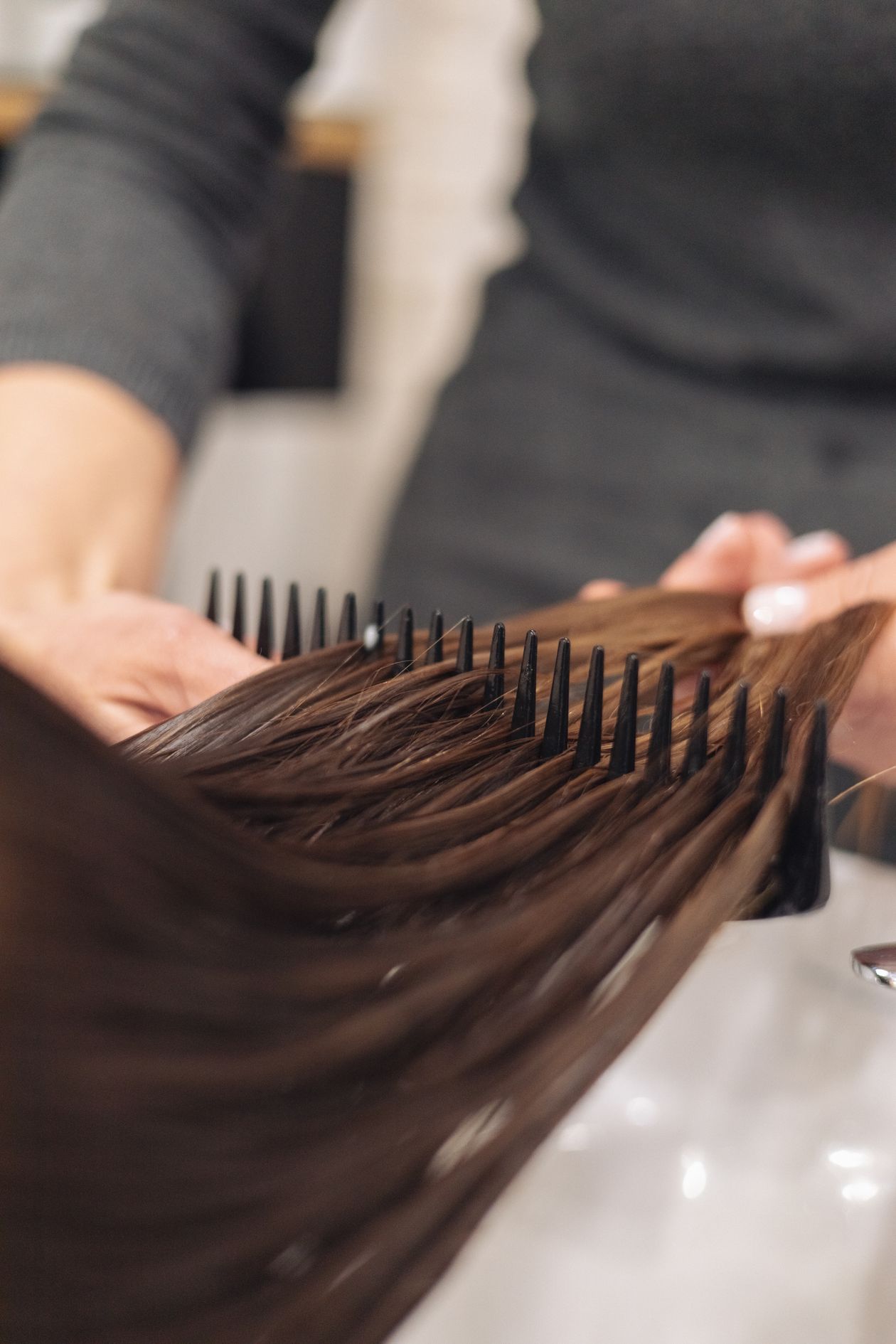
If your routine is already sensible and summer still wins, that is the profile a keratin smoothing treatment is built for. By filling and sealing the cuticle professionally, the treatment cuts down how much water the hair can absorb in the first place, so the physics above simply matters less. Blow-dry time drops, and a style set in the morning survives the walk from the car. Booking in late spring times the strongest weeks of the treatment to the worst weeks of the humidity. It is a listed specialty at Papillon Hair Design, including an all-natural keratin option, and it is the single most requested pre-summer service in most Carolina salons for a reason.
Pool, lake, and thunderstorm rules
Chlorine and salt water both roughen the cuticle, so rinse hair with clean water before swimming, which saturates it with water that is not trying to damage it, and rinse again after. A braid or bun keeps treated and untreated hair alike from whipping into tangles in lake wind. And when a thunderstorm catches you, do not re-style wet hair with a hot iron the second you get inside; that combination, water plus high heat inside the strand, is one of the fastest routes to the damage that makes next month frizzier. Blot, dry gently, then style.
Common questions
Why is my hair fine in winter and frizzy all summer?
Winter air holds far less moisture, so porous hair has little to absorb and stays as it was styled. Summer humidity gives every rough spot in the cuticle water to drink, and the uneven swelling that follows is frizz.
Will more product fix my summer frizz?
Usually not by itself. One leave-in conditioner used well beats four products layered hopefully. The bigger fixes are conditioning properly on wash day, drying fully with a nozzle, and keeping your hands out of your hair afterward.
When is a smoothing treatment worth it for frizz?
When your routine is already reasonable and humidity still undoes it daily, or when your drying and styling time every morning costs more than the treatment would. Timed for late spring, it covers the worst of the season.
Photos in this guide are representative stock images.
← All guides from Papillon Hair Design← Back to Papillon Hair Design