Hair grows about half an inch a month. That single fact explains both why a bad haircut feels endless and why it is not: in six months you gain roughly three inches, which is the difference between a pixie and a bob, or between layers you hate and layers that finally sit right. The grow-out fails most often not from slow growth but from two mistakes, panic-cutting it again at week two, or refusing all trims for a year and ending up with long, damaged hair instead of the style you wanted.
A plan beats both. What follows is the version stylists walk clients through when someone sits down and says the words every stylist knows: I need to grow this out.
- Weeks 1-2: assess, do not react. Live with the cut through a few washes before changing anything; hair sits differently once it is styled your way.
- Month 1: get a shaping trim. A stylist removes bulk and fixes the outline without touching the length you are trying to gain.
- Months 2-3: change the part and the texture. A new part, waves, or clips disguise uneven layers while they even out.
- Months 4-6: trim the ends only. Short, regular dustings keep split ends from traveling up and undoing your progress.
- Month 6 onward: reassess the goal. With real length back, decide with your stylist whether the original plan still suits you.
Why you still need trims while growing
This sounds backwards, so here is the logic. Split ends do not heal, and they do not stay at the ends. A split travels up the strand over time, thinning the hair and eventually breaking off higher than where it started. Hair that is never trimmed can lose length from the bottom almost as fast as it gains it from the scalp. A dusting, where the stylist removes an eighth to a quarter inch, costs you almost no length and keeps the ends sealed enough to actually accumulate growth. Every eight to ten weeks is the usual rhythm during a serious grow-out.
Shaping matters as much as the ends. Most cuts have a designed outline, and as hair grows that outline lands in unflattering places: the layer that sat at your cheekbone now sits at your mouth, the weight line of a bob drops to your shoulders and flips. A shaping trim adjusts the outline and removes bulk where it has pooled, without resetting your length. Tell the stylist clearly that you are growing it out and the goal is shaping only. Those words change the appointment.

Styling through the worst stretch
Every grow-out has one bad month, usually when the length is too long for the old style and too short for the new one. Three tricks carry most people through it. First, change your part. Moving a part an inch changes where layers fall and can hide the side that grew out worst. Second, add texture. Waves and bends disguise uneven lengths that look obvious on straight hair, and a flat iron used to bend rather than straighten takes two minutes. Third, accessories are not surrender: clips, headbands, and a low twist get you through formal occasions while the plan works.
Products help at the margins. Hair at an in-between length often looks worst when it is too clean and slippery, so a little texture spray or a day-two wash cycle gives it grip. If the grow-out is from very short hair, the neckline and the hair over the ears will need tidying between shaping trims, a five-minute cleanup most salons will do without a full appointment. Ask, because a tidy neckline makes the whole head look intentional.
The bridge options
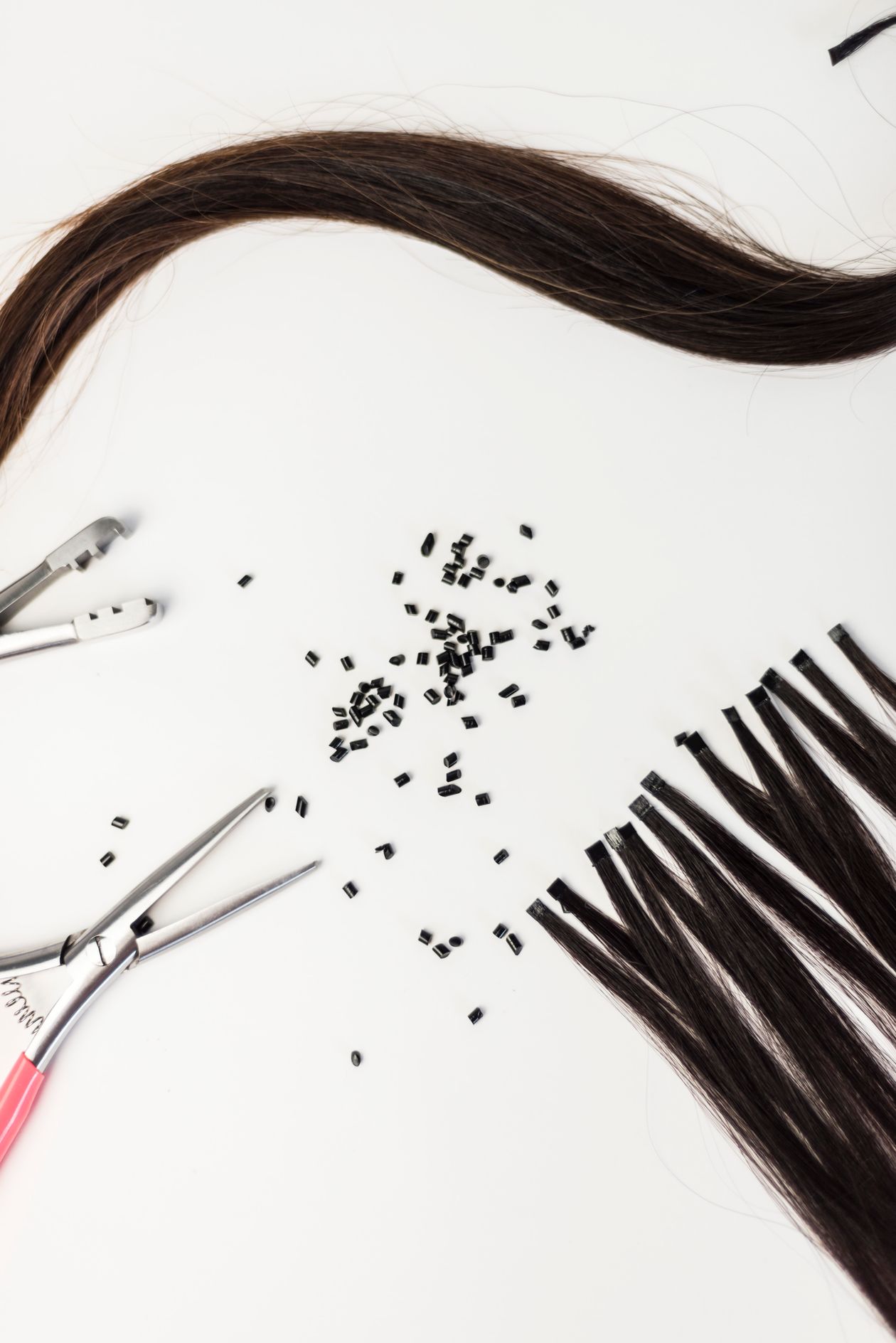
Sometimes the honest answer is that the gap between your hair now and your hair goal is too long to style through, usually after a very short cut or significant breakage. That is where extensions earn their keep, not as a permanent look but as scaffolding. A few well-blended pieces add length at the sides, where grow-outs look thinnest, while your own hair catches up underneath. Salons that offer extensions, including Papillon Hair Design, can usually design a partial set for exactly this purpose and remove pieces as your real length arrives.
Color can also buy patience. A gloss or a soft dimensional color makes growing hair look deliberate rather than neglected, and it changes what you notice in the mirror from length to finish. If the budget is one service, though, spend it on the shaping trims. Structure beats decoration during a grow-out.
Protect the growth you are getting
New length is only useful if it stays attached. Heat styling every day, tight ponytails in the same spot, and rough brushing of wet hair all break strands at exactly the fragile mid-lengths a grow-out depends on. Use heat protectant, detangle wet hair gently from the ends upward, and vary where ties and clips sit. Piedmont summers add one more insult: sun and pool chlorine dry hair out fast, so rinse hair with clean water before swimming and condition more often from June through August. None of this is glamorous, but grow-outs are won on these boring habits, not on supplements or special shampoos.
Common questions
How fast does hair actually grow?
About half an inch per month for most people, a little faster in summer and a little slower with age. Nothing applied to the ends changes that rate; the wins from good care come from keeping the length you grow instead of breaking it off.
Should I really trim hair I am trying to grow?
Yes, small amounts on a schedule. Dusting the ends every eight to ten weeks stops splits from traveling up the strand, which is how untrimmed grow-outs stall at the same length for a year.
Can anything make the awkward stage shorter?
Not the growth itself, but the stage feels shorter with shaping trims, a part change, added texture, or a few extensions at the sides. Most people find one bad month in the middle and smooth going on both sides of it.
Photos in this guide are representative stock images.
← All guides from Papillon Hair Design← Back to Papillon Hair Design